

The source may be compensated and/or may receive an affiliate commission if you buy through links on this page. Homeowners might want to consider their options in the kind of home insulation before choosing one to meet all of their insulation needs.
There are different types of home insulation that offer the optimal amount of insulation for your attic, walls, and more.
With insulation, you're trying to stop hot air from coming in or out of the building. It holds heat in the winter and keeps your house cooler in the summer to save money and keep the temperature as close to the same as possible.
Various types of insulation can be used in your home. Some are designed for use in spaces between wall studs and ceiling joists, and some are used to block off small gaps or to create a uniform barrier. Consider your local weather and moisture conditions as well as your home's construction when choosing a material.
Read Further: Home Maintenance Checklist That Saves Time And Money
No material is superior to another. Consider using the following points to compare different home insulation types and how they might suit your space, including installation, performance and maintenance.
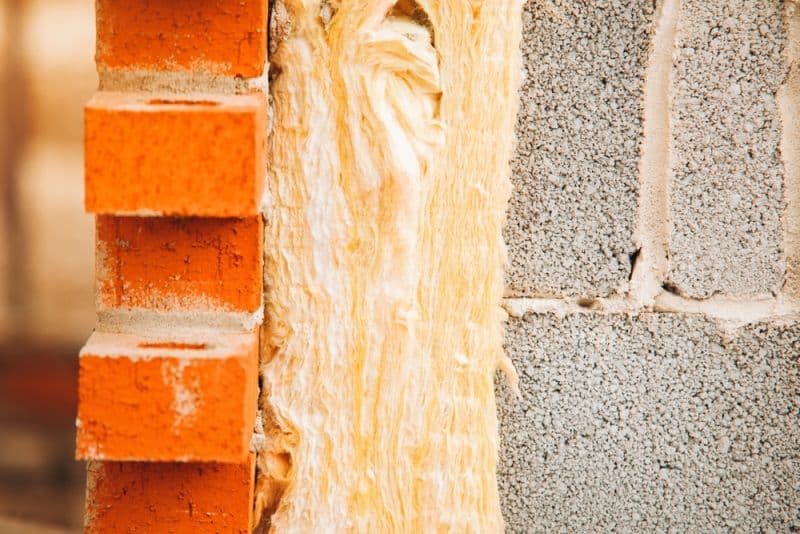
Fibreglass is one of the most common types of insulation in homes because it is inexpensive and comes in batts, rolls, and loose-fill. Fibreglass is made of tiny glass fibres that help trap air and reduce heat flow. Batts are commonly used between wall studs, between floor joists, and in the attic space.
When installed at the proper depth, fibreglass insulation does an effective job of preventing heat loss without gaps or compression. It alone cannot, however, prevent air from escaping. A professional installer will seal around pipes, wiring, and window casings to reduce drafts.
Commonly, insulation like cellulose is composed of recycled paper batts that have been treated for fire. Usually blown in, cellulose is effective for use in attics and tight wall cavities in that it will fill in awkward spaces where batt insulation doesn't.
It is largely dependent on the way it is installed and the structure around it. Cellulose can sink after years, which could actually decrease its thickness. It's also dampness, as its performance can also go down with long-term attack and its associated problems with the structure.
Once sprayed, these substances grow and expand, sealing the space and forming an air-tight layer. There is less density in open-cell foam, which is softer than closed-cell foam and has slightly less resistance to compression. Closed-cell foam is usually denser and provides a little more insulation.
Some of the spray foam insulation pros and cons you should think about before purchasing. Foam can seal cracks and be flexible in hard-to-penetrate areas, but it is usually pricier than fibreglass or cellulose. It must be installed by a qualified installer, with proper precautions and (potentially) ventilation and moisture protection.
Mineral wool is another fibre product, this time one made of mineral-based fibres. Mineral wool is available as batts or boards and has thermal insulation plus sound control and fire-resistance qualities.
These materials may be appropriate for walls, ceilings, and some basement applications. They are typically more expensive than simple fibreglass, and their performance depends on the use of the proper product and application without gaps.
Rigid foam board insulation is typically made from expanded polystyrene, extruded polystyrene, or polyisocyanurate. It can be installed in foundation walls and basement spaces, as well as exterior walls and other areas where continuous insulation is beneficial.
Because of the solid insulation values of these panels, they can be quite compact but are relatively thick. Sealing the joints and following fire-safety and moisture-control codes are very important for these boards.
An R-value (thermal resistance) is a way of measuring how well an insulation material resists the ability of heat to flow through it. The higher the R-value, the more it fights against heat transfer for the given thickness of material.
The right R-value will vary based on your climate, where the insulation is going in your home, and energy recommendations in your area. Attic insulation, for instance, often requires a higher total R-value than certain other spaces in your home because of the large temperature fluctuations that occur in a roof.
Compare products: Look at not only the total R-value for each product, but the R-value per inch of each. If space is limited, then a material with a higher R-value per inch might be a practical choice.
Which insulation is ideal for attics varies according to whether you have a vented or unvented attic, or if the attic is part of your conditioned living space. Loose-fill cellulose and fibreglass are both common choices for attic floors because they can cover a wide area.
Instead, spray foam can be used in some rooflines or complex areas to allow for air-sealing. But attic venting, roof moisture, and existing insulation should be reviewed. Air sealing air gaps around all ceiling penetrations and attic access points also adds value to this home upgrade.
Resolve roof leaks or other sources of moisture before installing insulation. Do not allow insulation to contact heat-generating fixtures unless they are specifically designed for this purpose, and maintain the necessary ventilation channels.
A fibreglass vs. cellulose insulation comparison ultimately boils down to their installation, price, coverage, and the inside of your house. Fibreglass batts are easy to install in cavities that are easy to reach. Blown-in fibreglass may be best for attic floors. Cellulose can be helpful in filling and tightening up irregularly shaped and new construction jobs, as well as a retrofit in enclosed cavities.
It doesn't mean one material is better for every house. Cellulose can settle if it's not installed well or is over-compressed, and fibreglass can be compromised if it is not installed thoroughly or if it gets too wet. Don't make your decision based on the product name; compare what was installed.
An insulation cost comparison would need to account for materials, labour, prep work, air sealing, and removal of damaged or existing insulation. Fibreglass is typically one of the cheaper options available, with cellulose and mineral wool likely to be more expensive, although this depends on the product and the application. Spray foam is likely to be more expensive.
Your final price will vary based on the size of your home, its accessibility, local labour costs, the depth of insulation desired, and the complexity of the project. Get an itemised quote from the contractor, noting which areas are being insulated, the estimated R-value, air-sealing work, and repairs, if any. This is a better way to compare costs than dollars per square foot.
So, what are the types of home insulation that work best for your home and walls? Choose the home wall insulation types, material, the best material for your house, home insulation cost comparison estimates, and how to compare R-value home insulation ratings.
Whether your home is new or existing construction, crawlspace, attic, wall, or basement, you must know how to insulate a house using fibreglass, cellulose, mineral wool, rigid foam, or spray foam for your project.
Cold rooms, varying temperatures, excessive bills and drafts are clues that insulation is not where it should be. Having an energy assessment performed will help you identify problem areas and determine where the greatest return will come from: upgrading insulation, sealing air leaks, or improving equipment.
Certain projects—for example, applying fibreglass batts in accessible regions—are doable by seasoned homeowners. When it comes to protective gear, electrical safety, moisture control, and local building codes, can you handle them on your own? If so, great; for spray foam and other more complicated retrofit jobs, call in a pro.
Yes, sufficient insulation will cut down on sound passing through the walls, floors and ceilings, but it is only one factor. Different materials, walls, gaps, and other construction elements will all affect the noise levels. Mineral wool, a dense insulation product, can assist but not totally block the noise.
Old insulation can stay in place if it is clean and dry. If it has become mouldy, pest-infested, or saturated, it should be evaluated and removed before installing new insulation.
Yes, if it modifies the movement of heat, air or water vapour without considering the specifics of a home's design and location. Inadequate ventilation, roof leaks, and wrong vapour-control layers can all cause condensation. An effective system of insulation considers all of these factors.
This content was created by AI